Pipe bursting, from the pit up.
How a bursting head breaks an old sewer or water line underground and pulls a new one in behind it, when that works, when it does not, and what it costs in Canada.
Pipe bursting is a trenchless method for replacing a buried pipe. A cone-shaped head is pulled through the old pipe from a launch pit to a receiving pit, breaking it and pushing the fragments into the soil, while a new continuous pipe, usually fused HDPE, follows in the same path. It suits broken or undersized brittle pipe and can install a larger pipe, but it keeps the old route and grade.
Pull a bursting head through one old sewer line
A house lateral runs from a launch pit by the foundation to a receiving pit near the street. Pick the old pipe, the upsizing, the depth, the ground, nearby services and connections, then play the pull and watch what the head does to the pipe and the soil.
What the model shows, in words
The head breaks the pipe it replaces
Rods from the puller in the far pit draw a hardened cone through the old line. As it passes, the host pipe cracks and its pieces are shoved sideways into the ground, while fused HDPE slides into the channel the cone leaves behind. Clay and cast iron shatter; fibre pipe tends to crush flat; plastic and ductile iron need blades to split them open.
Even a same-size burst moves soil
The expander is about ten percent wider than the new pipe, so the channel it opens is larger than the old pipe even when nothing is upsized. The model uses the same geometry as the Upsizing & Displacement Calculator: a 150 mm host, three new sizes, and the litres of ground compressed outward for each metre and for the whole run.
Shallow lines lift the lawn
Choose a depth under about a metre and a moving bulge appears on the surface above the head. That is the displaced soil finding the easiest way out. Deeper lines spread the same push through more ground before it reaches the top, which is why depth matters as much as pipe size when judging heave.
Services inside the halo need attention first
The glowing ring around the head marks the zone being pushed hardest. A gas service drawn about 0.4 m above the pipe sits inside it, so it turns red as the head goes by. When services have never been located, the model shows a question mark instead, because nobody can say what the head will meet.
A sag survives the burst
Tick the camera-found sag and the old pipe dips in the middle of the yard. The head follows that dip, the new pipe settles into it, and standing water shows in the finished line. Bursting keeps the old route and grade, so a belly usually needs a dig at that spot instead.
The score is the Fit Check, unchanged
Every setting adds the same points as the Pipe Bursting Fit Check, and the band and likely head come from its rules. The picture is illustrative: halo size, heave height and pit spacing are drawn to explain, not measured. A camera survey, locates and the installer decide the real plan.
What brought you to pipe bursting?
Pick the closest match. Each path goes to the guide that answers it in full.
Pipe Bursting Fit Check
The Fit Check scores a line on the factors that make pipe bursting easier or harder: host material, upsizing, depth, ground, nearby utilities, connections and what the camera showed. A total of 0 to 2 reads as a good candidate, 3 to 5 as possible with conditions, and 6 or more as a poor candidate worth comparing with other methods. It is a screening guide, not an engineering assessment.
How the Pipe Bursting Fit Check works →
Also freeUpsizing & Displacement Calculator
Calculate how much soil a pipe bursting head pushes aside: expander size, litres displaced per metre and per run, and the upsizing ratio, drawn to scale.
Pipe Bursting Fit Check
Read these first
Static, pneumatic or split?
How each head delivers its force, and why the host pipe decides which one is used.
CornerstoneRisks and problems
Heave, vibration, nearby gas and water lines, stuck heads, and the clearances that matter.
CornerstoneUpsizing & displacement
See to scale how much soil the expander pushes aside for your pipe sizes.
CornerstoneHiring an installer
What a proper survey covers, the questions to ask, and what the warranty should say.
What it looks like down there
Illustrations of what this work involves and what a camera or a trained eye picks up. Every guide on PipeBursting.ca carries more like these.
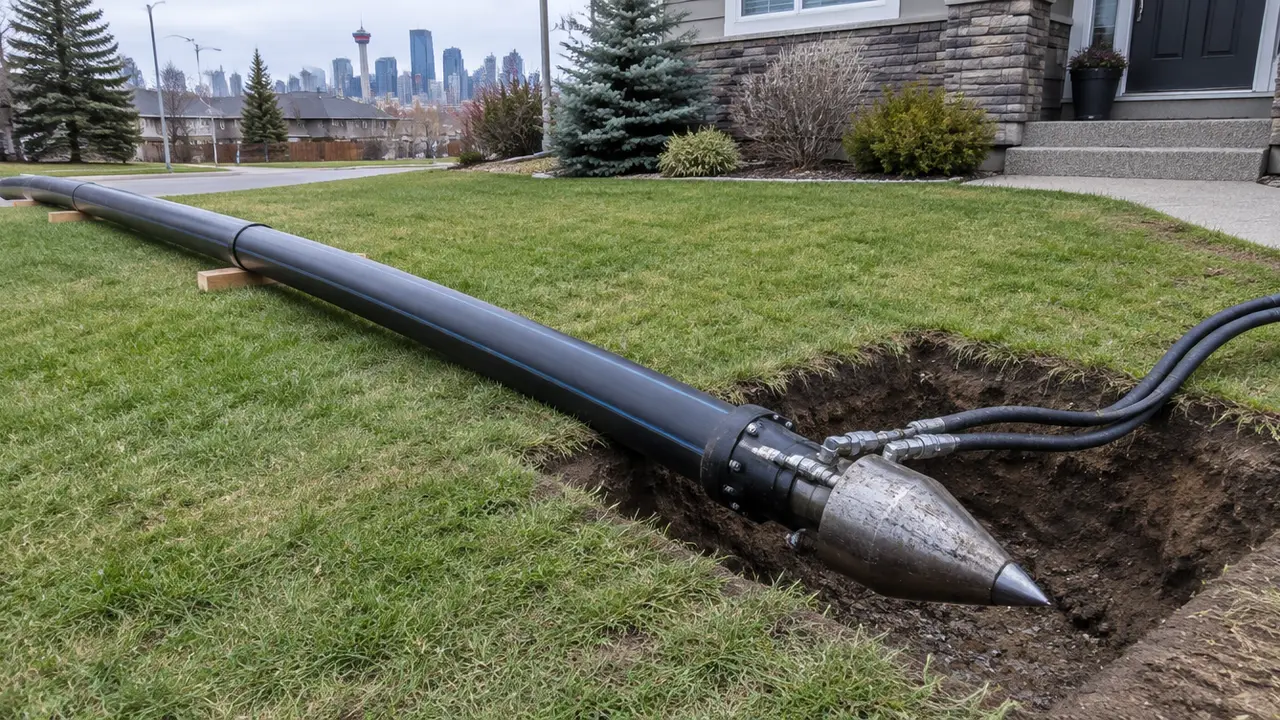
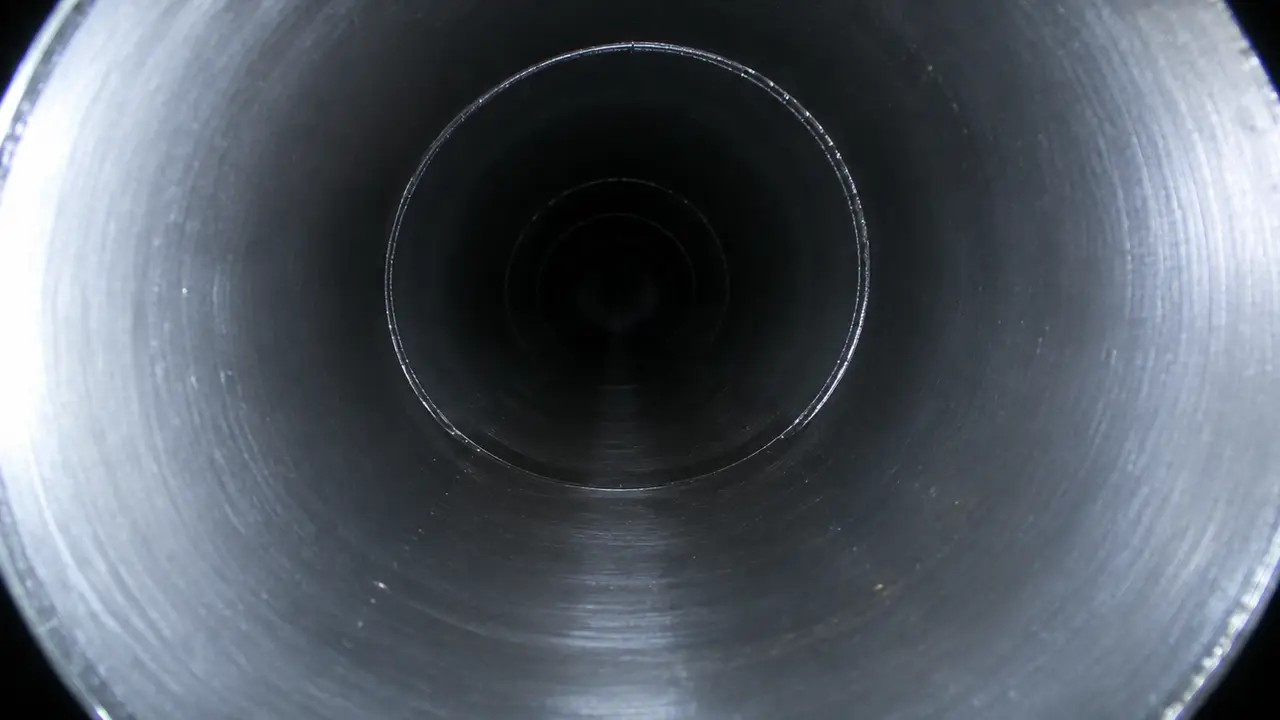
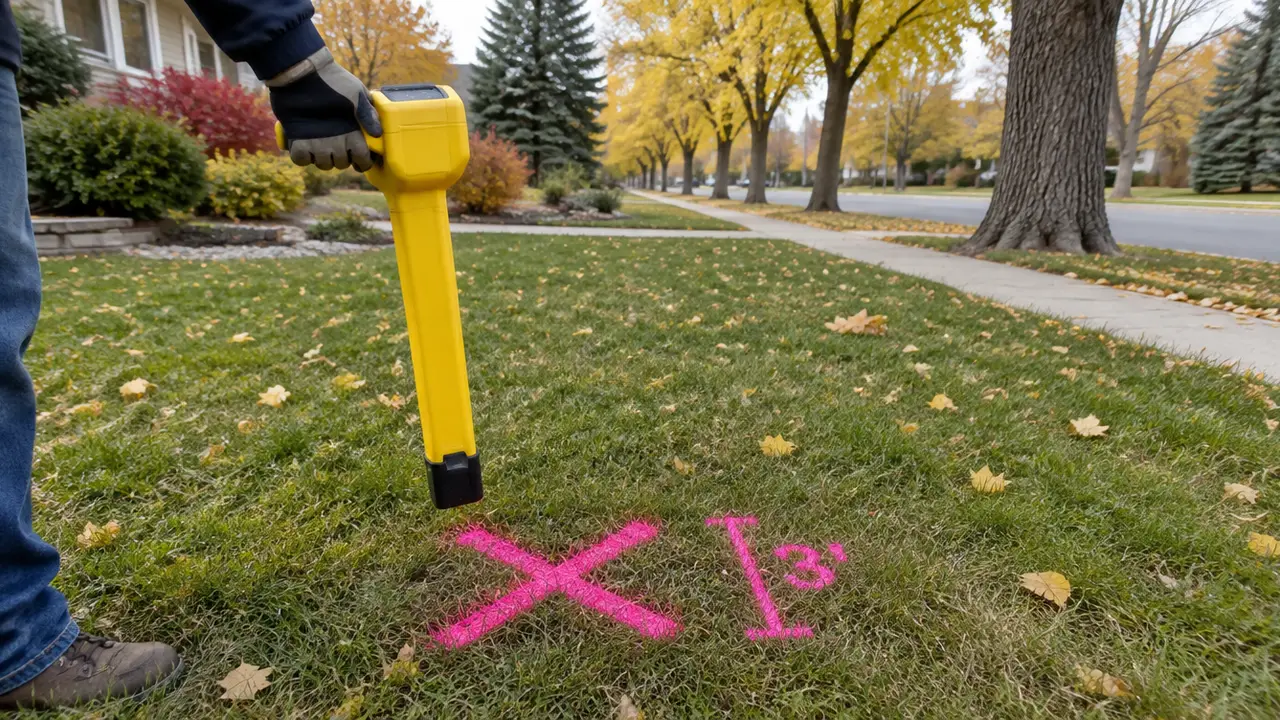
01 /What actually happens underground during pipe bursting?
A bursting head is a hardened cone slightly larger than the new pipe. It is attached to a cable or a string of steel rods threaded through the old pipe from the far end, and to the new pipe behind it. As the puller in the receiving pit draws it forward, the cone forces the old pipe outward until it cracks, pushes the pieces into the surrounding soil, and opens a channel the new pipe slides into. When the head arrives, the old pipe is gone and a new one lies along its path.
The US EPA's fact sheet on the method describes the key difference from lining: the old pipe is not reused as part of the new line. That is why bursting works on pipe too broken to line, and why it can put in a larger pipe. The trade-off is that it needs pits and it pushes soil outward, which is why depth, ground and nearby utilities matter so much. The full sequence is in what pipe bursting is.
02 /When is pipe bursting the right tool?
Bursting earns its place when the host pipe is brittle and badly broken, when more capacity is wanted, and when the ground above the middle of the run is expensive to open. It is a weaker choice when the line sags, bends sharply, has many connections, runs through rock or under a shallow slab, or passes very close to other services.
Screen your own line in a minute with the Pipe Bursting Fit Check. It scores host material, upsizing, depth, ground, utilities, connections and camera findings exactly as described on its page, and suggests the likely head. Materials are covered one by one in which pipes can be burst.
03 /What should I expect on a residential bursting job?
On a house sewer lateral, expect a camera survey and a pit sketch before any price, a permit and utility locates before any digging, and one to three working days on site. One pit usually goes near the foundation where the sewer leaves the house, another near the property line or the city connection, and more at any branch, sharp bend or obstruction the camera found. Drains are out of service for part of a day while the line is disconnected.
- Survey
A recorded camera run confirms material, depth, route, repairs, connections and any sag.
- Plan
Pits, pipe size and dimension ratio, head type, utilities to expose and a stall clause go into the quote.
- Dig and disconnect
Pits are excavated and shored where needed; the old pipe is cut at each end and at branches.
- Pull and reconnect
The new pipe is fused, pulled, rested, joined at both ends and recorded on camera.
- Restore
Pits are backfilled in layers and the surface is restored as the contract says.
The day-by-day version is in bursting a house sewer lateral. Water services and mains have their own steps, in bursting water lines, and larger buildings and municipal mains are covered in commercial and municipal bursting.
04 /What does pipe bursting cost, and how do I compare quotes?
As a 2026 planning estimate, bursting a 15 to 25 m residential lateral in Canada typically quotes about $10,000 to $30,000 CAD. Pits drive the price more than pipe length: each is roughly $1,500 to $6,000 before restoration, and setup adds $500 to $2,000. The cost page breaks a quote into lines and works through an example.
To compare fairly, give every installer the same footage, ask each for a numbered pit sketch, the pipe's outside diameter and dimension ratio, the head type, the price of an unplanned pit, and a final camera run. Weigh bursting against the other options in bursting vs lining and bursting vs open cut. Terms you meet in quotes are defined in the glossary, and short answers to common questions are collected in the pipe bursting FAQ.
05 /Who is behind PipeBursting.ca?
PipeBursting.ca is part of the HAUSE Sewer network, an independent information and quote-request service. HAUSE is not a contractor and does not perform bursting or any other work. The guides draw on public sources such as the US EPA's pipe bursting fact sheet, the Plastics Pipe Institute's polyethylene pipe handbook, municipal open data and provincial locate services, and they label estimates and editorial scoring as such.
Replacement methods in general are covered on sister site SewerReplacement.ca, and pricing across all sewer work on SewerQuotes.com. Calgary homeowners can read how City data on clay tile service lines applies in the Calgary guide. When you are ready, send your camera report and details and the desk will reply with next steps.
Every guide on PipeBursting.ca
What is pipe bursting, and how does it actually work?
What is pipe bursting? A plain explanation of how a bursting head breaks an old sewer or water pipe underground and pulls a new HDPE line in behind it.
ComparePipe bursting vs lining: when replacing beats relining
Pipe bursting vs CIPP lining and sliplining, from the bursting side: pipe condition, size, connections, pits and cost ranges, with a decision table.
ComparePipe bursting vs open cut (and directional drilling): which way to replace a line
Pipe bursting vs open cut trenching and directional drilling: depth, surface, grade, connections and cost ranges for replacing a sewer or water line.
MethodsHDPE pipe for bursting: wall thickness, butt fusion and the rest before tie-in
Why pipe bursting uses HDPE pipe: dimension ratio (DR) choices, how butt fusion joints are made, stretch and rest, bend limits and how long HDPE may last.
MethodsUpsizing by pipe bursting: how far to go and what it costs the ground
Pipe bursting upsizing explained: one-size and two-size upsizes, expander oversize, how much soil is displaced per metre, and when a bigger pipe is worth it.
MethodsStatic, pneumatic and split bursting: how the heads differ and when each is used
Static vs pneumatic pipe bursting, plus split bursting and hydraulic expansion: how each head delivers force, what it suits, and what to ask an installer.
MethodsWhich pipe materials can be burst, and which ones fight back?
Which pipes can be burst: how clay, cast iron, concrete, Orangeburg, asbestos-cement, PVC, ductile iron, copper and lead behave under a pipe bursting head.
PlanningChoosing a pipe bursting contractor: the survey, the quote and the warranty
How to choose a pipe bursting contractor: what a proper site survey covers, questions to ask, red flags in a quote, and what the warranty should include.
PlanningPits and site layout for pipe bursting: where the holes go and why
Pipe bursting pits explained: launch and receiving pits, service and obstruction pits, lay-down room for fused pipe, shoring, locates and the site plan.
PlanningPipe bursting risks and problems: ground movement, nearby utilities and stuck heads
Pipe bursting problems and limits: surface heave, vibration, clearance to gas and water lines, stuck heads, groundwater, and how installers plan around each.
PlanningDoes pipe bursting follow a sag? Grade, bellies and alignment explained
Does pipe bursting fix a sag or belly in a sewer line? Why the head follows the old grade, when a sag shrinks or worsens, and how installers correct it first.
ProjectsCommercial, multi-unit and municipal pipe bursting
Pipe bursting sewer mains and commercial or multi-unit building sewers: manhole runs, bypass pumping, service reconnections, difficulty classes and bids.
ProjectsBursting a house sewer lateral: what happens, day by day
Sewer lateral pipe bursting day by day: camera survey, permit and locates, pits, the pull, reconnection at both ends, inspection and restoration.
ProjectsBursting water lines: house services, lead pipe and water mains
Pipe bursting for water lines: replacing copper, galvanized and lead services and cast iron, PVC or ductile iron mains with potable pipe and testing.
CostsPipe bursting cost: what drives a bursting quote in 2026
Pipe bursting cost in Canada for 2026: planning ranges in CAD for a sewer lateral, per metre and per pit, plus the site factors that move a bursting quote.
ToolsPipe Bursting Fit Check
Is your sewer or water line a pipe bursting candidate? Score host material, depth, soil, utilities, connections and camera findings, and see the likely method.
ToolsUpsizing & Displacement Calculator
Calculate how much soil a pipe bursting head pushes aside: expander size, litres displaced per metre and per run, and the upsizing ratio, drawn to scale.
CalgaryPipe bursting in Calgary: which lines are candidates, and what to check first
Pipe bursting in Calgary: City data on clay tile sewer service lines by community, who owns which part, locates, permits and what makes a Calgary line a candidate.
Frequently asked
Is pipe bursting better than digging up the yard?
It is usually less disruptive and often cheaper when the pipe is deep or runs under driveways, trees or landscaping. Digging wins on short, shallow lawn runs and when the grade must change.
How do I know if my sewer line can be burst?
A recorded camera inspection tells you the material, condition, depth and connections. Run those through the Fit Check for a first read, then ask installers to confirm.
Does pipe bursting work in Canadian winters?
Yes, with thawing and frost protection at the pits. Frozen ground slows excavation and adds cost, but the pull itself happens below the frost.
What is the most common reason a line is a poor bursting candidate?
A sag that would be reproduced, a utility tight against the line, rock, or a string of connections that would each need a pit.
Is the old pipe removed during pipe bursting?
No. It is broken into fragments that are pushed into the surrounding soil and left there, with the new pipe running through the middle.
Can one company burst both my sewer and my water line?
Some installers do both, and doing them together can share pits. The water line needs potable-rated pipe, testing and its own connections.
Describe the problem once. Get a straight answer.
Send the symptoms and anything you already know — age of the house, what a camera found, what you have been quoted. The HAUSE Sewer desk replies with next steps and, where available, a local contractor for the job.
Sewage backing up right now? Stop using water, keep people away from the water, and do not touch electrical equipment near it.